Sunday, September 27, 2009

GM- The Anti Brand

“Buy a new General Motors car. Don't like it? Return it and get your money back”. By applying the familiar “money back guarantee”, to something as expensive as an automobile, GM’s new “May the best car win” campaign takes this proven concept to a completely new level. In addition to the high price for handling returned vehicles, GM risks tremendous loss as their vehicles decrease approximately 30% when leaving the showroom. To be safe, GM has purchased insurance in case there are too many returns.
As part of the campaign, GM is releasing advertisements comparing its vehicles to German and Japanese models. Ads also highlight GM’s 5 year, 100,000 mile power train warranties. GM’s “chairman”, former AT&T CEO Ed Whitacre stars in the initial commercials. He explains to the audience that like you, he was originally skeptical about GM but "I liked what I found, and I think you will too." The ads end with a “may the best car win” signature.
According to GM vice chairman Bob Lutz, the new campaign “is a way to try to break through and get over some of the negative perceptions of General Motors and actually get people more comfortable about coming in to a GM dealership, trying a car, comparing it to competition. And, of course, the 60-day satisfaction guarantee is also combined with our five-year 100,000-mile power train warranty”
The new campaign has been criticized as being a poor imitation of Lee Iacocca’s famous “If you find a better car, buy it." ads. Experts question the campaigns focus on GM, instead of emphasizing the individual brands like Chevrolet, GMC, Buick and Cadillac more. Laura Ries, partner of the branding firm Ries & Ries wrote on her blog that the campaign is guilty of “implication of the opposite”, explaining that “GM thinks the money-back guarantee says it believes so strongly in its cars that it is willing to give you your money back if you’re not satisfied. But it is the opposite message that gets delivered. We are so unsure of our products, we’ll give you your money back.” She goes on to explain “The biggest problem with GM is that they don’t lead in any category. Ford is the leading truck brand. Toyota is the leading car brand. Lexus is the leading luxury car brand. BMW is the leading driving car brand. Mercedes is the leading prestigious car brand. What is a Cadillac? What is a Chevrolet? What is a Buick? What is a GMC? None of these brands lead in anything nor do they stand for anything.”
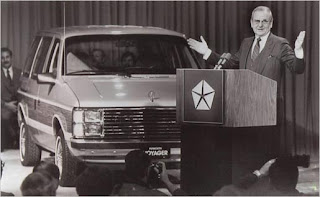
The truth is this ad campaign is complex, well researched and being micro executed. Here are the facts: There’s a long negative history that’s been hurting GM for years and that’s that people feel their cars are poorly built. Additionally, as Ms. Ries put it “GM does not stand for anything”. It can't, because the brand is too broad and unexciting. If Aveo, Suburban and Corvette are all under the Chevrolet brand, what can Chevrolet possibly stand for? To further complicate matters, GM was just bailed out by the government with your tax dollars and its Chaiman Ed Whitacre is Government appointed. It’s no wonder Americans have deeply negative emotions about it.
With this ad campaign, rather than glossing over the issues, GM chose to own up to 2 out of 3 of them. Using the government appointed chairman in its ads, messages that this company is going to run as a capitalistic, opportunistic business rather than like the Post Office. The chairman, although government appointed, is taking an vested interest in its success, to the point that he is willing to expose himself by starring in the advertising. The fact that it’s a poor imitation of Lee Iacocca tells everyone that although this man is no actor, he will do whatever he can to turn it around. Note that GM only plans to feature him in their initial ads. Their money back guarantee and car comparisons do a fairly decent job at tackling the issue of poor quality head on. They are not avoiding the subject but rather delving right into it. It emphasizes how they are aware you are skeptical about GM and you have a right to be, but give us a chance “I likes what I found and you will too”.

Brand wise however, they are doing nothing. That’s because a brand is not created through an ad campaign. A brand is intrinsic. It is the sum total of all customer touch points. An ad campaign can’t do it, so at this point they aren’t even trying. Rather than appealing to consumer’s emotional side, which is accomplished through branding, they are appealing to people’s logical side or rather to the minority of car buyers that make logical purchasing decisions. Logical car buyers are likely to read “Consumers Report” and do comparison shopping. Nuts and bolts type advertising appeals well to this segment. Comparisons to Japanese and German cars work well since GM vehicles can stand up to their foreign counterparts, item for item. “Money back guaranteed” gives GM an additional 1-up in comparison shopping. It also helps the logical decision maker feel secure in their decision to drive a GM vehicle. “May the best car win” is GM's final request to you: Judge GM on its quality rather than its brand appeal.

Yaacov Weiss is a brand strategist and founder of Tug branding and marketing, in Lakewood, NJ. If you’d like Yaacov to position your business, call 732-276-6432. You may also email Yaacov at yaacov@tugbranding.com.

Sunday, August 2, 2009

If a brand were a bouquet of flowers…

Two of the buzzwords circulating the brandosphere are “convergence” and “divergence”. Simply put, convergence means the merging of two or more ideas under one banner or offering. Examples include the blackberry-phone, Wawa-Gas Stations, calculator- watches, etc. Sears is a master of convergence offering multiple categories such as clothing, appliances, sporting goods, tools, furniture, camping supplies, home improvement, automotive supplies- and the list goes on- under one roof. Divergence on the other hand, means isolating a piece of a larger offering and making it stand on its own to perform a single function. Examples include Starbucks coffee, Dell computers, Just Tires, Jiffy Lube, Rita’s Ices etc. Procter & Gamble is the king at maintaining divergent categories by never merging any of its hundreds of companies or offerings together.
As businesses attempt to create new offerings (without actually inventing anything new), the question of whether to converge or diverge, constantly arises.
Convergence is logical. “Two is better than one.” From a consumer standpoint -If two ideas work well separately, wouldn’t it be even better to have them come together in one neat package? On the business end, if businesses anyways have the space, equipment and personnel, why not double dip and use it to generate multiple revenue streams? “Kill two birds with one stone.” Divergence, on the other hand, is illogical. From a consumer standpoint, why would someone purchase an item that performs a single function when they can purchase one that offers multiple functions? Why would you go to a specialty store that only sells one product type when you can go to one that sells many different things, including that one item? On the business end, why should a business limit itself to sell only one type of item when it has the capability of doing so much more?
Unfortunately, however, people don’t make purchasing decisions nor do businesses operate well, based on logic. Spending is a function of the heart, routed in emotion and intuition. Whichever offering type appeals to the heart best gets the order. A well run business needs to be seamless and systematic. Cohesiveness should be the objective rather than logic. What needs to be figured out is if convergence and divergence ideas resonate strongly and connect well with customers or not, and do convergence and divergence ideas enable businesses to run smoothly, or not?
Based on the brand theory that people think in categories (See previous article: Own the category, at tugbranding.blogspot.com), it seems that both convergence and divergence can work well, as long as they result in forming one single, complete category.
As an analogy, consider a bouquet of flowers: To one extreme, a dainty vase with one rose and some baby breath, make a small, nice, complete bouquet; appropriate for certain settings. On the other end, a banquet bouquet can be huge with hundreds of matching flowers, perfectly synchronized and laid out. As long as each one is a complete nice looking bouquet, people connect and there are takers. However if a bouquet is incongruent, either because it is overstuffed with mismatched flowers and resembles a mini wild forest, or because it is missing flowers and looks empty, no one at any level of the buying spectrum will connect and buy it. People’s feelings connect with complete offerings, however large or small. So too with convergence and divergence; as long as the sum total of either offering fits within one complete category, whether it be a single item or multiple item category, they can appeal to the potential buyer and be successful. Similarly, when businesses have one central goal in mind, falling under one category banner, they can run like well-oiled machines.
Does Starbucks, a single product type offering, make up a complete category? Sure, it owns the “premium coffee” category. Does Wal-Mart, that sells thousands of different items, make up a single, complete category? Sure, it owns the “household” category. Wawa-Gas Stations are “convenience stops” (or rest stops); BlackBerry-phone is a “communications device”. A Cd/tape/radio is a “listening device”. What category is Sears? Or a calculator watch? Beats me. And that may be why they are less popular than you would have imagined.
Yaacov Weiss is a brand strategist and founder of Tug branding and marketing, based in Lakewood, NJ. If you’d like Yaacov to position your business, call 732-276-6432. You may also email Yaacov at yaacov@tugbranding.com.

Sunday, July 19, 2009

Tell them what you are not

Although it may sound counterintuitive, there are ways to successfully brand a product or service by publicizing and focusing on attributes it does not posses. This form of branding can be divided into three categories:


The first one is publicizing something negative about a business (or what it is not good at) in order to qualify the positive. Consider the famous Avis slogan “Were #2. We try harder”. Proclaiming to the world they are not #1 takes guts. The underlying logic of qualifying the positive, however, sits well; because they are not #1, they need to try harder. Motel 6 is another example: “Our rooms aren’t fancy; our prices aren’t fancy.” Because their rooms are not fancy, therefore they are able to charge non-fancy prices.
This idea was expressed by adman Ron Hoff. He said "I have often wondered why corporate ads always strive to make the reader believe that the company is infallible. Admit one negative and the rest of your advertisement will gain believability."


The second category takes it a step further. In this category, negative attributes are expressed without even qualifying anything positive! For example, Listerine’s original slogan “The taste you hate, three times a day” or Buckley’s cough medicine “it tastes awful. And it works.” Both these companies chose to focus on an attribute –bad taste- that is entirely not positive. Volkswagen’s Beatle slogan “It will stay uglier longer” or Crocs’ slogan “Ugly is beautiful” chose to brand themselves as being ugly. Both Beatle and Crocs not only have slogans that emphasize their ugliness, their very names emphasize it as well! Naming a car after an insect or a sandal after a crocodile is no oversight but rather a well-planned brand strategy.


Why does it work so well? Why did these companies go on to become “cult brands” with huge fan clubs singing their praises? There are a few dynamics in play. I’ll share one of them with you: People’s minds cannot perceive an item as being good in all areas. The term “Jack of all trades, master of none” may not necessarily be true but is a deeply embedded principle etched in the psyche of the human mind. We don’t believe a Jack of all trades can be master of any. Not only that, but because our minds think linearly, intuitively we don’t truly believe anything to be a master of more than only one idea. Because these brands chose to publicly divest themselves of extraneous positive qualities, we come to believe that they truly mastered the single quality they express. If Crocs look ugly, we conclude that they must be comfortable. If Listerine or Buckley’s taste bad, they must work. Otherwise, why would people ever buy them?


In a different vein, the third category is about saying what you are not, but never explaining what you are. I like to call it the vacuum technique. Consider Obama’s “change” or “Yes you can” message. While it may seem like they told you what he is, in reality you were only told what he’s not. The word “Change” means it will not be like whatever was before the change. “Yes you can” means your prior state was one of “no you couldn’t”. As for what the “change” will be or what will happen when “you can”, that was left open-ended.


The reason this works is because by only saying what he is not, a vacuum is created as to what he may be. Science dictates that all vacuums get filled. Who fills the vacuum? You do. The masses replaced any problematic, unchanged circumstance of the past, with Obama. Obama branded himself as your favorite uncle. Simply saying he’s different than the negative without articulating why, forced the masses to think and figure it out on their own. They figured out that he was going to change all bad into good and was going to enable you (or America) to accomplish things you never did. The vacuum technique is so strong because a) it can’t be misinterpreted and b) the target personalizes it. Whatever went wrong in your past will change for the good. Whatever you personally couldn't accomplish in the past, you can now accomplish. Quite a feat. The sound of silence is loudest!

Friday, July 3, 2009

It’s all about Perception...

At a recent meeting, a prospective client turned to me and said, “The bottom line is that if I have good products and service, my business will succeed; if not, it won’t.” I found that a bit odd because, prior to the meeting, he admitted that despite his business already offering good products and service, it was in need of rebranding. It seemed he was torn between his realistic intuition to rebrand and an inability to comprehend why it works. The following is my explanation:
The first thing we need to understand, is that even if the bottom line was really about good products, service and price, we still need the benefits of branding and marketing.
Here’s why: When you were younger, surely someone posed the following, or similar, question to you: “How do you know the color green is really green; maybe it’s a different color that your eyes just interpret as green?” An interesting question to which there is no good answer. (what a tease!) If you were a little thoughtful, (is that a big "if"?) you probably said “You may be right and I’ll never know for sure, but it makes no difference what color it really is. What’s important is that it always appears to be green.” How very profound! (I'll give you the credit for that answer)What something really is does not make a difference; how you perceive it and how it relates to you, does.
There are hundreds of research studies to prove perception influences more than reality. Here’s one I’m sure you will recognize:
A study of Danish general practitioners in 2002 found that 48% of the doctors surveyed prescribed a placebo (the sugar pill that does absolutely nothing except give someone the perception that he is taking medicine) at least 10 times during that year. A 2004 study in the British Medical Journal of physicians in Israel found that 60% of the doctors used placebos in their medical practice. A meta-analyses in 1998 found that 75% of the effectiveness of anti-depressant medication is due to the placebo effect rather than the treatment itself. "Them Doctors" (to paraphrase Rev. Wright) and research scientists obviously believe in the scientific validity of treatment through perception (or some might argue-deception).
Here’s a product that directly addresses the desire for good service-through perception: According to Storming Images LLC, research indicates that digital flash menu boards produce a 46% customer experience enhancement due to perceived wait time in lines being less than static menu boards. Bill Yackey reporting for Fast Casual (April 2009) writes, “Digital signage gives customers something to look at….The perceived wait time is shortened, and the customer remains happy to be where he is.”
The perception of a good deal or the “need” for low prices was the subject of an extensive research study that concluded: the best thing to do when customers feel the price of an item is too high is to introduce an even higher priced model into the very same category. Customers then perceive the original item as being an affordable alternative.
Having good quality, service and price, is not what wins over customers. What does win over them is the perception of good quality, service and price. It so happens, that reality is usually necessary in order to sustain the perception. However, branding and marketing is what creates and reinforces such perception.
The truth is though, the perception of good quality, service and price, does not by itself motivate people to buy either. If it did, we’d all be broke in a day. People buy things only because they have unmet desires or needs they want fulfilled. The offering that best meets those desires or needs will get the order.
Branding is the process of infusing an offering with signals that signify and create the perception that the product best corresponds to and fulfills their particular needs or desires. If the signals are in place, the objective perception should follow- followed by a sale!

Yaacov Weiss is a brand strategist and founder of Tug branding and marketing, based in Lakewood, NJ. If you’d like Yaacov to position your business, call 732-276-6432. You may also email Yaacov at yaacov@tugbranding.com.

Friday, June 19, 2009

Laddering- What are You Really Selling?

“Sell the sizzle, not the steak” is the number-one lesson in sales. It means emphasize benefits rather than product. While this is great advice to follow, with branding strategy, things are somewhat more sophisticated. The answer to “What are you really selling?” should be: “Whatever they (customers) are really buying.” The problem, however, is that 90% of purchasing decisions are made subconsciously, with people having little idea why they really buy a particular product or service. Pinpointing why customers really buy, however, is imperative for developing your brand’s identity. A research technique called “laddering” allows us to do just this.
Here’s how it works:
Just as a ladder is made up of multiple rungs, and ascending each rung brings you one step closer to your goal, laddering is the process of digging deeper and deeper into the consumer’s psyche, to discover his underlying motivations for buying. The “ladder” used in laddering consists of four basic rungs: attributes, benefits, consequences and personal values.
Laddering research is accomplished by asking the simple question: “Why?”
For example, a parent tries to put his child to sleep at night, but the child refuses to cooperate.
Parent: Please go to bed.
Child: Why?
Parent: You need a full night’s sleep.
Child: Why?
Parent: So you will be well rested for tomorrow morning.
Child: Why?
Parent: So that you can pay attention in class.
Child: Why?
Parent: So you’ll do well in school.
Child: Why?
Parent: So that you can grow up to be the best you can be.
Child: Why?...
As you can see, with each passing swap the child takes at his parent’s request, the parent goes one-step deeper into revealing an underlying motivation for wanting the child to go to sleep.
Now, suppose we were able to sell the parent a device that is inserted into a pillow and plays soothing music to relax children, putting them into a deep sleep. Our target audience is parents of children that have difficulty getting to sleep on time. Utilizing the information obtained from the above conversation makes it possible to sell this device on any level of the ladder. The basic attributes can be its selling point by describing it as “a device that is inserted into a pillow and plays soothing music.” We can sell the benefits by calling it “a device that gives your child an extra deep sleep.” We can sell the consequences by saying, it’s “a device that will help your child pay attention better in class,” or, alternatively, “a device that will help your child do better in school.” Lastly, we can sell the personal values: it “gives your child the opportunity to be the best he can be.”
Once we understand the target customers "ladder" for your particular product, we will need to determine which rung on that ladder most compels them to buy. This will become your brand’s sales position.
Here are a few examples of famous slogans and catchphrases of brand name businesses, cast on different rungs of the ladder:
Attributes:
eBay – The World’s Online Marketplace; De Beers – A diamond is forever.
Benefits:
Staples – easy!; Verizon – Can you hear me now? Good!; Geico – Geico saves you money; Energizer batteries – It keeps going and going and going.
Consequences:
Rockport – Rockports make you feel like walking; Yellow Pages – Let your fingers do the walking; IKEA – live unboring.
Personal Values:
Apple Computer – Think different; Nike – Just do it; US Army – Be all you can be; Obama – Yes you can; Tug Branding – Stand out and lead!

Yaacov Weiss is a brand strategist and founder of Tug branding and marketing, based in Lakewood, NJ. If you’d like Yaacov to position your business, call 732-276-6432. You may also email Yaacov at yaacov@tugbranding.com.

Friday, June 5, 2009

Own the Category

There is a very powerful technique that not only makes your business stand out from the competition, it literally eliminates it. More than the ORDO we spoke about in last article, it will place your sales offering in a class of its own. To explain, I will first need to introduce you to the following important brand theory:
Similar to file systems, people automatically and subconsciously classify their purchasing needs into categories. For example, if you need to do a large grocery shopping, what you really need is a “supermarket.” “Supermarket” therefore is a category. By extension, retailers are also placed into the very same categories. So, when you realize you need to do a large grocery shopping, first you categorize your need as a “supermarket” need and only then, by feeling around within the “supermarket” category will you land upon a specific retailer, such as ShopRite. The purchasing decision process therefore is essentially one of first choosing a category and then feeling around within the chosen category for a supplier that best answers your need. Consequently, from the moment your mind first selects the “Supermarket” category, you already excluded any offering outside that category, including the corner grocery store. In the event you can’t get to the “supermarket,” you will, out of necessity, re-categorize your need (possibly compartmentalizing your shopping list into smaller sub-categories such as bakery, butcher, fruit store etc.) and consider options within second tiered categories.
It follows that if there was a way to create an entirely new category and make you the only provider within that category, there would be no (direct) competition! Many of the well-known brands expertly do just this. There are a number of different techniques to accomplishing this; I will share one of them with you today. We will label it “subcategorizing.” First, I’ll describe the technique, then follow up with an example.
“Subcategorizing” is the process of divide, conquer and name. 1) Divide- We explore broader categories that already exist (such as a supermarket) and find a section within it that has the ability to become a successful category in its own right. 2) Conquer- We position this new (sub) category to offer it in a way that’s substantially superior to its current offering within the broader category. 3) Name-We name the new category and let the world know it exists.
For example: Before Starbucks came around, brewed coffee was generally offered only as an ancillary part of larger menus, through diners, cafes and the like. Starbucks essentially “subcategorized” by 1) slicing off (or dividing) coffee from the larger menus; 2) it conquered it by offering a huge variety of coffees. 3) It named the new category “Coffee”. As a result, Starbucks became the only provider within its newly invented niche category.
Consider this: If all things were equal and there’s a choice between getting a coffee at a regular Cafe or at Starbucks, would you choose the CafĂ©, look for the beverage menu and drill down to the limited 2-3 coffee options they may offer, or would you rather reach directly for Starbucks, that is all about coffee? Chances are you’d opt for Starbucks.
Let me end with a disclaimer: When the world notices your new category doing well, direct competition is likely to crop up within the very category you created. It is therefore imperative that we immediately name the category and brand your business as its creator. If people realize you were first, they will usually consider you the “category leader.” After category owner, that’s the next best position to be in.

Yaacov Weiss is a brand strategist and founder of Tug, a branding and marketing firm based in Lakewood, NJ. If you’d like Yaacov to position your business, call 732-276-6432. You may also email Yaacov at yaacov@tugbranding.com or www.tugbranding.com

Saturday, May 23, 2009

Let’s begin our discussion of developing your sales offerings’ brand identity. For a sale offering to be successful in the marketplace, it must be recognized as a preferred choice over the competition. Otherwise, what would motivate people to choose it over the competition?

To ensure your sales offering becomes a preferred choice, it needs to embrace a profound idea that is (a) extremely meaningful to a targeted audience, (b) uniquely different from the competition, and (c) distinct enough for you to “own” and become recognized as representing. This idea should be so powerful that people buy into your offering on its merit alone. Let's call this “Ownerable and Relevant Differentiated Offering” (ORDO for short).

Well-branded offerings, by definition, are based on clearly defined ORDOs. You can often find it in a company’s mission statement, tag line, slogan or advertising. Fedex’s promise, “Absolutely, positively overnight” or Lands’ End’s “Guaranteed Period,” are examples of obvious ORDOs.
To arrive at your offering’s ORDO, you must research the following three categories, cross-reference them, and then combine their results. The three categories are: You (and your product), Your Competition and Potential Audiences.

Here are some things we need to consider in each category to establish your ORDO:

You: What are your (or your product’s) strengths and weaknesses? How are you unique? Specifically, what strengths do you have over the competition? We'll consider the feasibility of ridding you of your weaknesses and acquiring strengths. It might mean, for example, moving to a better location, hiring certain experts or agents, or investing in better equipment.
The Competition: Your power lies in differentiating from the competition in a meaningful way. We'll Analyze their strengths and weaknesses to determine if there’s a marketplace void you can fill. A good way to differentiate from them is to be their opposite. For example, if their ORDO emphasizes comfort, we'll consider focusing on style; if theirs stresses professionalism, we'll consider touting friendliness.
Potential Audiences: An idea or benefit can rarely be meaningful to everyone. We need to ask: Which type of audience...
would benefit most from your offering (before it’s branded)?
would provide the most profit?
requires the least convincing?
has a natural affinity to your offering?
do you naturally work with best?
is willing to overlook your weaknesses?
have competitors not yet targeted with a similar type offering?
Most importantly, we consider which audience desires your natural strengths most and is most unhappy with your competition’s weaknesses. We boil them down into definitive stereotypes and decide which one is best to target. The more specific your target audience is, the stronger your brand will be. Don’t worry about us being too focused. If properly branded, you should notice equal or more business from peripheral customers and “wanna bes", as from the targeted audience.

Just like diamonds polish each other; rubbing these three components against each other will make your ORDO emerge. The ORDO is the soul of the brand. Your brand’s identity will be built to support it. Discovering your ORDO, therefore, is the very important first step to building a brand’s identity.
P.S. this post was published 11:30 pm. computer clock had wrong time.

Sunday, May 10, 2009

Marketing for Success: Brand it before you Market it


By: Yaacov Weiss

SEQ CHAPTER


Welcome! Please allow me to lead you into the fascinating and somewhat mysterious world of marketing and branding. This column is intended for anyone wishing to sell something to the public. The techniques I will convey to you here are based on extensive research by some of the world’s leading marketing firms and have been proven to work. You’ll learn why consumers buy certain brands though they are not necessarily cheaper or of better quality, and avoid others even though they are not necessarily inferior or more expensive.

Let us start our discussion with a simple, yet profound truth: What makes consumers gravitate to any particular product or offering? It is a result of their minds envisioning it fulfilling some unmet need or desire in the best possible manner available. Branding and marketing therefore, are the processes of creating signals that communicate to a targeted audience that the product or offering will fulfill their needs or desires in a manner most appealing to them. Traditional marketing has been categorized into Product, Price, Place and Promotion (The Four “P”s). In general, these four categories are the main ingredients that make up almost any offering. They combine to form a “marketing mix.” While each category is broad and deep, we’ll try to keep it simple:

Product
– This refers to what you are actually selling (can be services as well). This includes the whole package, including warranties, accessories, etc.

Price – This refers to the price you set for the “product.” The perception of a product changes according to the price it commands.

Place
– This refers to placement in a retail environment. (Example: The same product can be sold in discount stores or upscale stores, in pharmacies or in grocery stores.) It also refers to the method of distribution. (Example: Some clothing companies sell through third party retail stores, whereas others sell through their company websites.)

Promotion
– This refers to how you communicate with your targets, letting them know you exist and what you are offering. It includes advertising, public relations, internet marketing, signage, visibility, etc.

When properly developed, the Four “P”s cover a vast array of issues that affect/create buyers’ perceptions and form the basis for a working marketing plan. Now, let us turn to branding. If marketing were a ship, branding would be its rudder; if marketing were a project, branding would be its direction manual.

Branding is the art of discovering and formulating an identity that makes your offering most appealing to the target audience. Just as we are attracted to some people over others, we are similarly drawn to specific brands and products over others. In the branding phase, you’ll need to decide, amongst other things, the tone of you offering. For example, should your presentation be classy or rugged, cheerful or muted, animated or relaxed, sophisticated or simple, serious or humorous, trendy or classic, masculine or feminine, etc.? The 4 Ps of marketing are channels through which the brand identity is generated and proliferated. Consequently, before you try to develop your marketing strategy, you must first choose a brand identity. Our next article will give you an overview as to how to locate the starting point for your brand identity.

Yaacov Weiss is a brand strategist and founder of TUG, a branding and marketing firm based in Lakewood, NJ. If you’d like Yaacov to position your business, call 732-276-6432. You may also email Yaacov at yaacov@tugbranding.com or www.tugbranding.com